Not every cataract
is the same operation
A dense, hardened lens or a cataract with coexisting retinal disease is a different level of difficulty.
A retina specialist examines the retina first and plans the surgery around what is found.
A cataract is a clouding
of the lens
Inside the eye sits a clear lens. Light passes through it and forms an image on the retina. When that lens turns cloudy, the condition is called a cataract.
A clouded lens blocks light or scatters it off its original path, so the world looks as though seen through a misted window.
Most cataracts come from age-related change in the lens proteins. Trauma, diabetic complications and certain long-term medications are other causes.
Presbyopia or cataract?
Different causes, different treatment. Telling them apart comes first.
Looking into the distance
Unchanged and clear
Hazy even far away
Reading small print
Blurred until you hold it further away
Still hazy however far you hold it
With reading glasses
Clear again, at least for now
A new prescription does not help
In bright light
Little difference from dim light
Glare makes seeing harder, not easier
How colours look
The same as before
Duller and more yellow
The two often arrive together. Measurement decides which is which. More on presbyopia
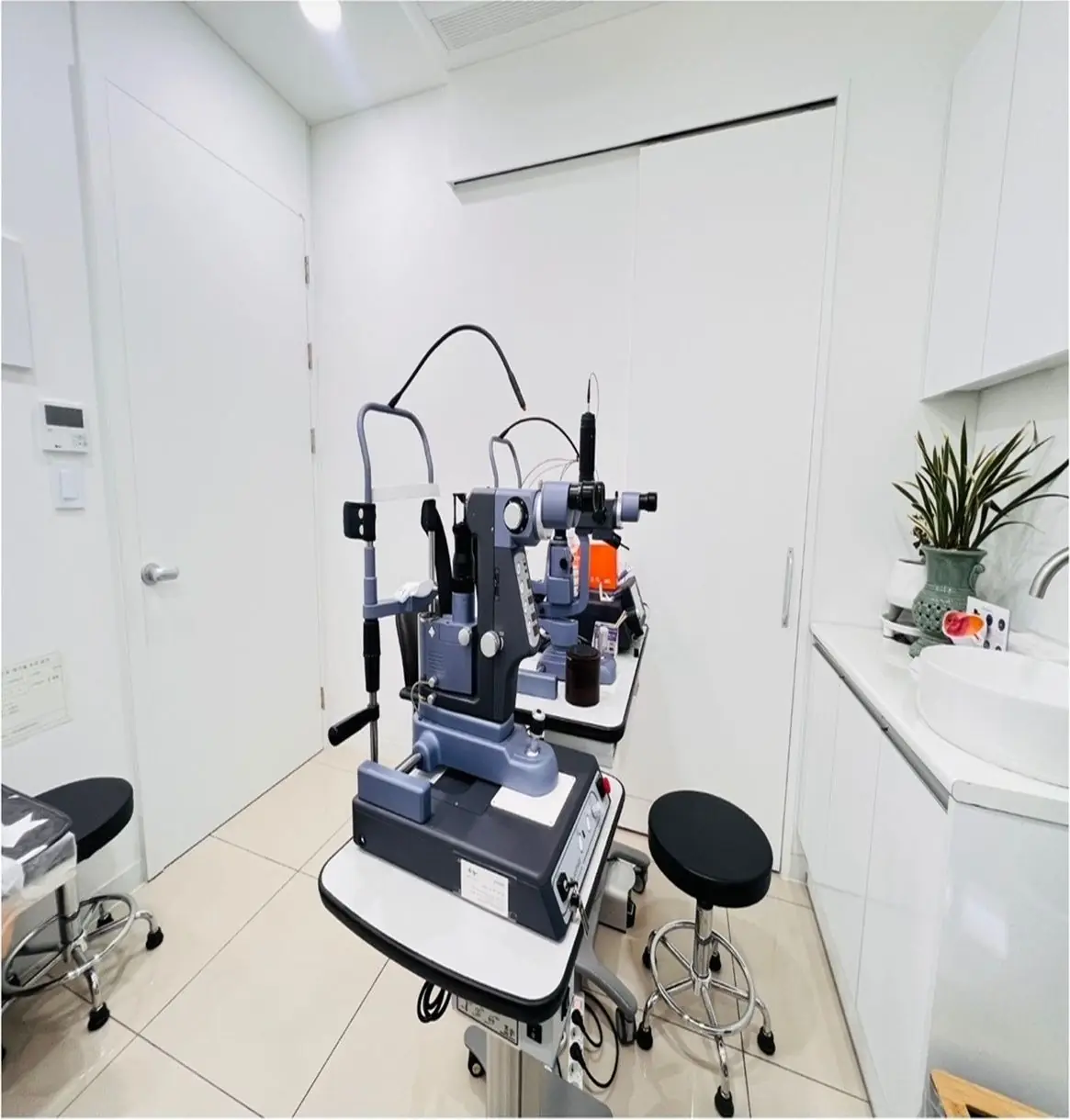
A surgeon who also
reads the retina
A lens that has hardened, a pupil that will not dilate,
or an eye with retinal disease behind the cataract raises the difficulty considerably.
In those cases the plan matters as much as the technique.
Choosing an intraocular lens
Not the most expensive lens, but the one that fits how you actually use your eyes.
Trifocal
Covers near, intermediate and distance, reducing dependence on glasses. Suits people who drive, read and use a phone throughout the day.
Extended depth of focus
No diffractive rings, so night-time halos are reduced while distance and intermediate stay sharp. Suits frequent night driving.
Toric
Corrects astigmatism at the same time as the cataract. Can be combined with monofocal or multifocal designs.
Monofocal
Focused at a single distance with excellent clarity there. Covered by Korean national health insurance.
The lens type and model are decided at consultation, after measuring the cornea, retina and astigmatism and discussing how you use your eyes.
After the operation
Day of and day after
The eye is checked and recovery instructions are given.
Week one and month one
Inflammation and pressure are monitored as the eye settles.
Regular follow-up
Checks continue until vision has stabilised.
Capsule opacification
If haze returns later it is cleared in the clinic with a short laser procedure.
International patients: please allow enough time in Korea for the post-operative checks, and tell us your travel dates at consultation so the schedule can be planned around them.
Frequently asked
How long does the examination take?
Do I really need surgery? Will drops not work?
Can a cataract come back after surgery?
I had LASIK years ago. Can I still have cataract surgery?
Will cataract surgery also fix my reading vision?
Do you check the retina before cataract surgery?
A careful diagnosis
is where safe surgery starts
A cloudy lens can hide retinal disease for a long time.
The retina is examined before the surgical plan is made.
Whether and when to operate, and which lens to use, depend on your measurements and are decided in consultation.